
Sometimes filler does exactly what you wanted at first, but months or years later, something looks different. A lip border may appear less defined. The area above the lips may look fuller than it used to. Cheeks or under-eyes can seem puffy, uneven, or simply not like you anymore. Filler migration and unwanted filler placement can leave patients wondering whether adding more product will help or only make things worse.
For hyaluronic acid fillers, dissolving lip filler or filler elsewhere in the face can offer a way to correct unwanted product. But there is an important difference between estimating where filler sits and actually seeing it beneath the skin. Ultrasound filler dissolving allows the provider to visualize filler before placing hyaluronidase, which can make treatment more targeted.
Continue reading to understand how the process works, what can and cannot be dissolved, and why ultrasound is changing the way filler correction is approached.
What Is Ultrasound-Guided Filler Dissolving?
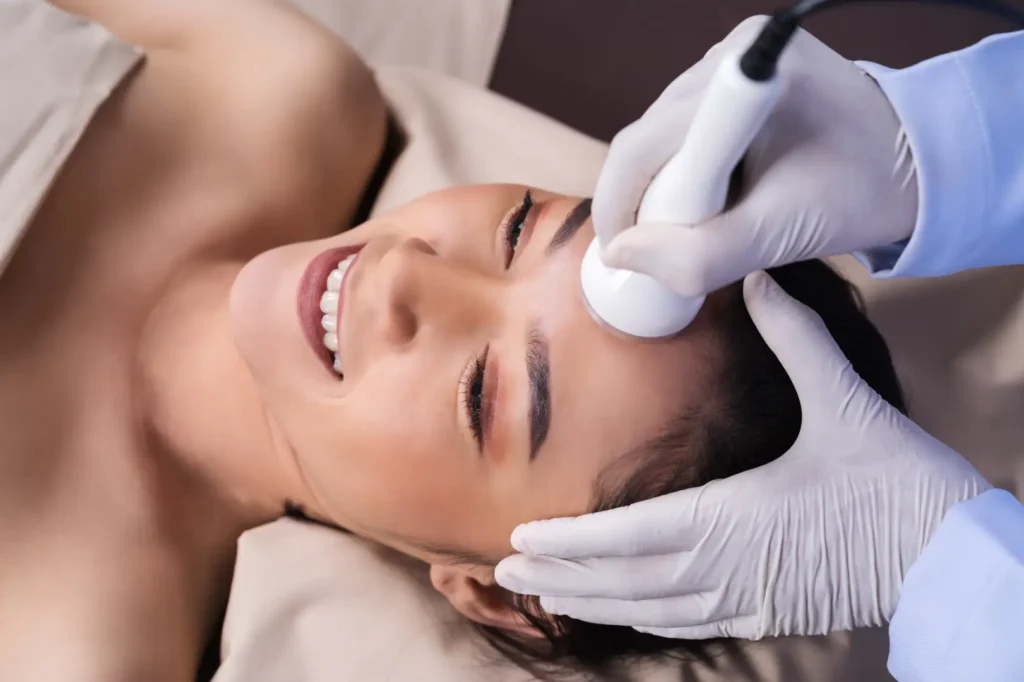
Ultrasound-guided filler dissolving combines diagnostic ultrasound imaging with a hyaluronidase injection to locate and break down unwanted hyaluronic acid filler. Instead of relying only on what can be seen or felt from the surface, ultrasound provides information about what is happening beneath the skin.
This can be particularly useful because filler is not always located exactly where it appears to be. Previous injections may have been placed at different depths. Product may have shifted beyond its intended area, or multiple rounds of filler may make the anatomy more difficult to assess from appearance alone.
Once unwanted hyaluronic acid filler has been identified, hyaluronidase can be placed into the targeted area. The enzyme helps break down the hyaluronic acid so it can be cleared by the body.
The objective is not necessarily to dissolve everything. Ultrasound may allow for a more selective approach when the patient wants to correct one area while preserving filler that is still providing a desirable result elsewhere.

Why Ultrasound Changes the Filler-Dissolving Process
Filler correction can involve much more than injecting dissolver into an area that looks too full. Ultrasound adds another layer of information, helping the provider make decisions based on what is actually visible beneath the skin.
1. It Helps Locate Filler Before Treatment
A provider can learn a great deal by examining and palpating the face, but neither method provides the same view as ultrasound imaging.
Ultrasound can help visualize filler within the tissue and provide information about its location and depth. This becomes especially useful when a patient has received multiple treatments or cannot remember exactly what was injected and where.
Consider the upper lip. A patient may notice a shelf-like appearance above the vermilion border and suspect migration. With ultrasound, the provider can examine the area and determine whether filler is present where the concern appears. This can make lip filler removal less dependent on estimation alone. Treatment can be planned around what is actually found.
2. It Can Identify Filler Migration More Precisely
Filler migration occurs when injectable product is found outside its intended treatment area. Around the lips, this may create unwanted fullness above the lip border. Elsewhere on the face, misplaced or residual filler can contribute to puffiness or uneven contours.
Migration is not always obvious. Some changes may instead result from swelling, anatomy, tissue aging, or simply having more volume than currently suits the face. Ultrasound can help distinguish where filler is present beneath the surface. If migrated hyaluronic acid is identified, the provider has a clearer target for treatment.
That is valuable because the goal is not simply to make an area smaller. It is to understand what is contributing to the appearance before attempting to correct it.
3. Dissolving Can Be More Targeted
Traditional filler dissolving may rely heavily on visible landmarks, palpation, injection history, and the provider’s knowledge of facial anatomy. Those remain important skills, but ultrasound can add real-time visual information.
With ultrasound guidance, a provider may be able to place the filler dissolver more deliberately around identified deposits of unwanted hyaluronic acid. This matters when a patient does not want everything removed. Someone might like the fullness within the lips but dislike migrated product above them. Another patient may appreciate cheek volume but want an isolated pocket of old filler addressed.
Targeting cannot promise that hyaluronidase will affect only one microscopic spot. The enzyme can diffuse through tissue. However, better visualization can help the provider approach treatment with more information about where unwanted filler is located.
4. It Can Help Preserve Filler You Still Like
Not every unhappy filler patient wants to return completely to baseline. Sometimes the issue is not the entire result but one part of it. This is where ultrasound-guided filler dissolving becomes especially interesting. The provider can assess where filler remains and identify the areas that correspond with the patient’s concern.
For example, someone may still love the shape and fullness of her lips but notice migration above the upper lip. Completely dissolving both lips could remove a result she actually likes. A more selective plan may instead focus on the migrated area while trying to preserve desirable filler elsewhere.
That is a very different philosophy from assuming that correction always means wiping the slate clean.
5. It Adds Information to Complex Filler Histories
Filler can remain present longer than patients expect, and a person’s injection history is not always straightforward. Someone may have received different products from different providers over several years.
That can make correction more complicated. The provider may need to determine whether visible fullness represents current anatomy, old filler, newer filler, migration, or a combination of factors. Simply adding more product can sometimes make an already overfilled area appear heavier.
Ultrasound provides another source of information before treatment decisions are made. When filler is visible on imaging, the provider can better understand its location relative to surrounding structures.
This can be particularly helpful for patients who arrive saying, “I know something doesn’t look right, but I don’t know exactly what happened.”
6. Hyaluronidase Does the Actual Dissolving
Ultrasound finds the target. Hyaluronidase is what breaks down appropriate filler. So, how does hyaluronidase work? Hyaluronidase is an enzyme that breaks down hyaluronic acid. Because many commonly used dermal fillers are made with hyaluronic acid, the enzyme can be injected when those fillers need to be reduced or removed.
Once injected, hyaluronidase begins breaking apart the hyaluronic acid filler. The body then clears the broken-down material. How much enzyme is needed can vary. The filler product, amount, location, age of the filler, and desired degree of correction may all influence the treatment plan.
This is another reason dissolving lip filler should be treated as a medical procedure rather than a quick cosmetic undo button. Assessment and dosing matter.
Filler Dissolving Questions Patients Ask
Patients often arrive with very practical questions about dissolving, especially when they have never undergone the procedure before. Having straightforward answers can make the decision feel much less intimidating.
What Dissolves Filler?
Hyaluronidase is used to break down hyaluronic acid dermal fillers. It does not dissolve every type of injectable filler, which is why identifying the previous product is important when possible.
The amount and placement of hyaluronidase depend on what is being treated. A small area of migration may require a different approach from extensive filler placed across several facial areas.
How Long Does Filler Take to Dissolve With Hyaluronidase?
Hyaluronidase begins working after injection, but the visible result should not be judged immediately. Swelling from the injections can temporarily disguise the reduction in filler.
The area should be given time to settle before deciding whether more dissolver is needed. Your provider can recommend an appropriate follow-up interval based on the treatment performed.
Can All Filler Be Dissolved?
No. Hyaluronidase specifically works on hyaluronic acid. Other filler materials and biostimulatory products do not respond to it in the same way.
This is one reason patients should tell their provider everything they remember about previous injections, including the product used, treatment dates, and areas injected.
How Much Does It Cost to Dissolve Filler?
The cost to dissolve filler varies because treatment needs are not identical. A small area of lip migration may involve a different amount of time, imaging, and medication than correcting several areas of the face.
Some patients also need more than one appointment. A consultation provides a more useful estimate because the provider can first evaluate what needs to be treated. Cost should not be the only deciding factor. Filler dissolving is an injectable procedure, and experience, assessment, imaging when appropriate, and complication management all matter.
See Before You Dissolve
Filler correction should not feel like guesswork. When a patient wants to preserve what looks good while addressing migration, overfilling, or unwanted placement, seeing what lies beneath the skin can add valuable information to the treatment plan.
At The Sandbar Beauty Company in Pompano Beach, FL, ultrasound-guided assessment can bring greater precision to dissolving lip filler and other appropriate filler corrections. Rather than automatically dissolving an entire area, the process can begin by understanding where the filler is, what the patient wants changed, and what deserves to stay. That thoughtful approach can make filler correction feel less like starting over and more like refining what is already there.
Contact us today to book your consultation!